Example student viewIllustrative data only

Welcome, Maya

Your Profile: Building Word Power

This page is your home base for the reading work that fits how you think. Watch, read, and try the ideas that look interesting - there's nothing to submit here.

Maya R.

Grade 8 ยท Example data

Last assessed Mar 18, 2026

Example Assessment Snapshot

Vocabulary & Academic Language

18th pctl

Priority area for this profile

Word Recognition

36th pctl

Developing accuracy with familiar and unfamiliar words

Sentence Processing

52nd pctl

Relative strength when meaning is supported by context

About Your Profile

This profile compares your reading skills to one another, not to other students.

Right now, building word power is likely to give you the biggest boost. That means learning a few important words deeply, noticing word parts, and using new words in speaking and writing.

This does not mean vocabulary is your worst subject overall. It means that, within your own reading profile, word knowledge is the best next step for growth.

Try this next:

  • Learn a few important words deeply
  • Break longer words into meaningful parts
  • Use new words in discussion and writing

Start with Frayer Model, Word Map, and Concept Map strategy when an important class word keeps showing up.

Watch & Explore

Vocabulary & Academic Language Student Introduction Video

Vocabulary & Academic Language Mini Reading Toolkit

A student-facing toolkit for learning important words deeply, noticing meaningful word parts, and using new academic words in discussion and writing.

Vocabulary & Academic Language Mini Reading Toolkit

Strategies for You

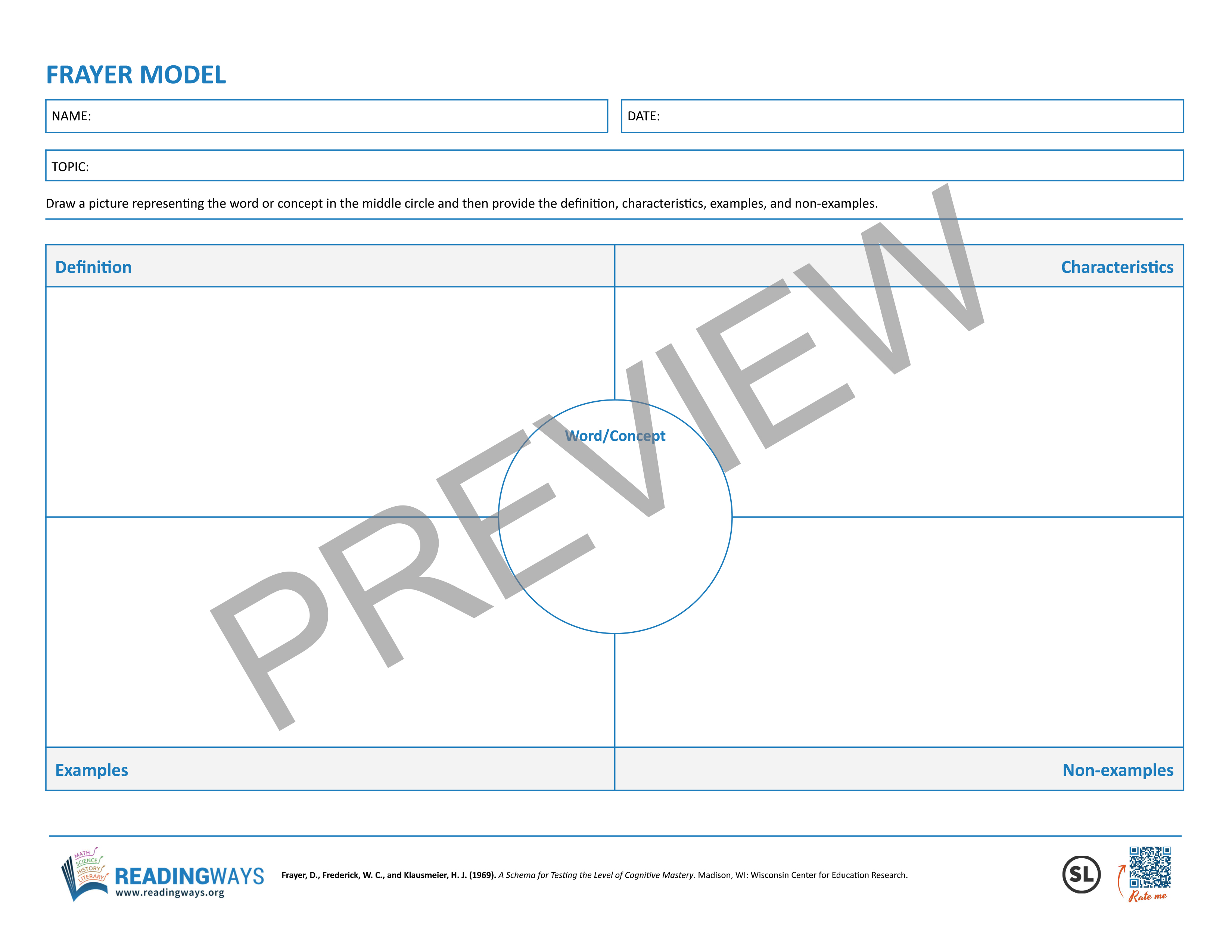
Frayer Model

Vocabulary

Use a four-box chart to learn a word well enough to explain it, recognize it in reading, and use it in class.

Frayer Model builds deep vocabulary knowledge through structured word analysis, directly targeting Cluster 1 vocabulary gaps.

How to do it

Use this when you study a word

Use this for a word that matters more than once in reading, discussion, writing, or problem solving. A Frayer Model helps you know the word well enough to explain it, recognize it, and use it correctly.

Do this in your notes

  1. Write the word in the center.
  2. Add a definition in your own words.
  3. Add characteristics or important features.
  4. Add examples and non-examples.
  5. Use the word in a sentence connected to your class text or task.

Note stem

Definition: ___

It is like this: ___

Example: ___

Not this: ___

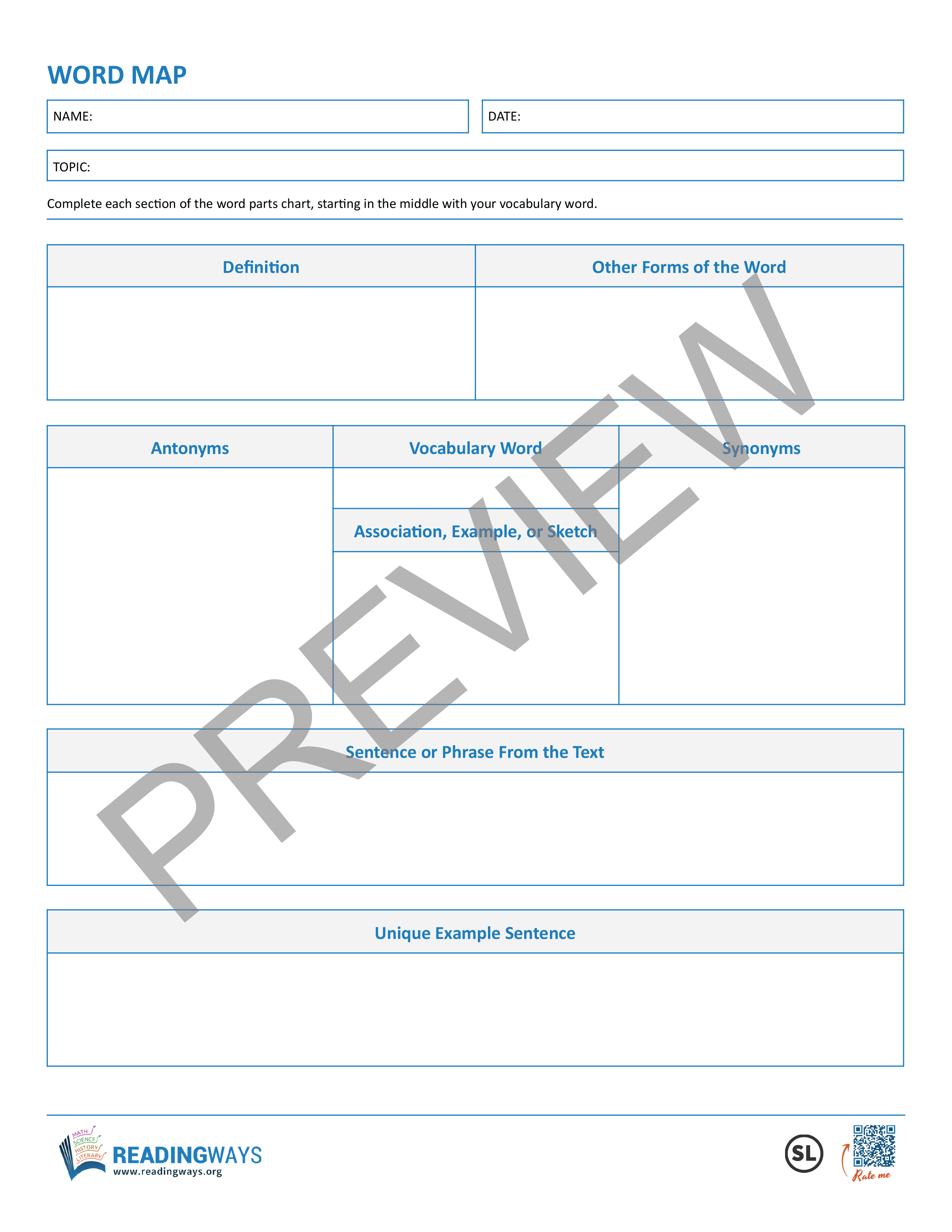
Word Map

Vocabulary

Use a word map to connect a new word to what it means, what it is related to, and how to use it.

Word Maps help students explore multiple dimensions of word meaning, reinforcing vocabulary breadth.

How to do it

Use this when you need to learn a word well

Use this for a word that matters in reading and writing. A word map helps you connect the word to meaning, examples, related words, and context so it is easier to remember and use.

Do this in your notes

  1. Write the word and a meaning in your own words.
  2. Add an example from class or the text.
  3. Add related words, synonyms, categories, or associations.
  4. Add a picture, symbol, or quick memory clue if it helps.
  5. Revisit the map when the word appears again.

Note stem

Word: ___

Meaning: ___

Example: ___

Related word or idea: ___

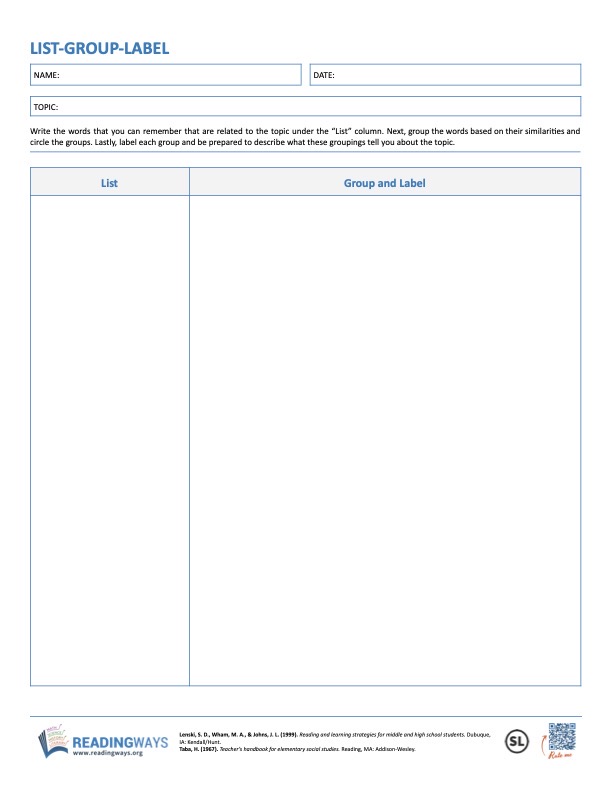
List, Group, Label

Vocabulary

While you read, group related words and label the category so you understand how the words connect and what larger idea they belong to.

How to do it

Use this when you read

Use this when a page introduces many important terms. Instead of memorizing a loose list, sort the words into groups and name the relationship so the bigger idea becomes clearer.

Do this in your notes

  1. List the key words from the section.
  2. Group words that seem to belong together.
  3. Give each group a label that names the category, pattern, or relationship.
  4. Add one short note about why the words fit together.
  5. Use the group labels as mini-headings when you review.

Note stem

Group: ___

Words in it: ___

Label: ___

Why they belong together: ___

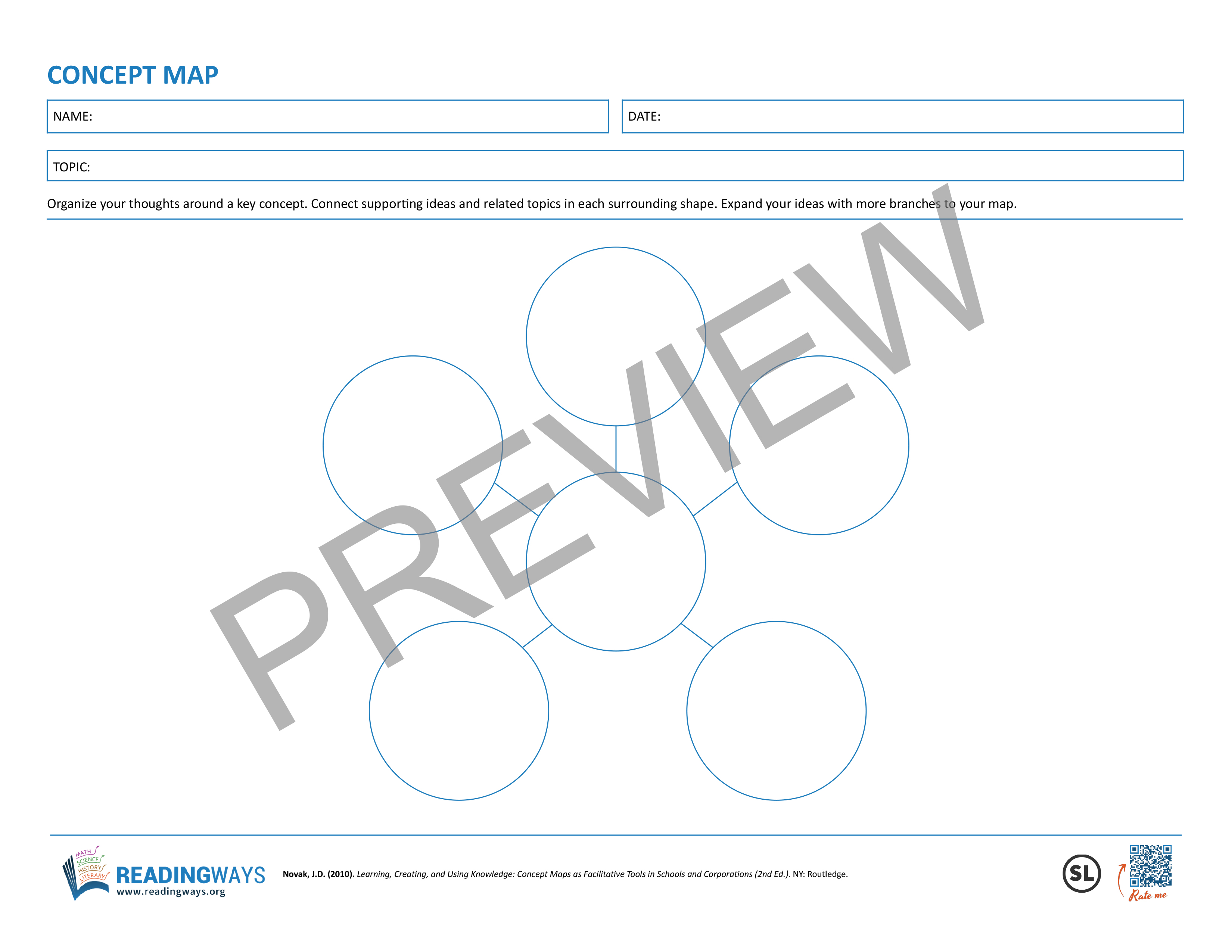
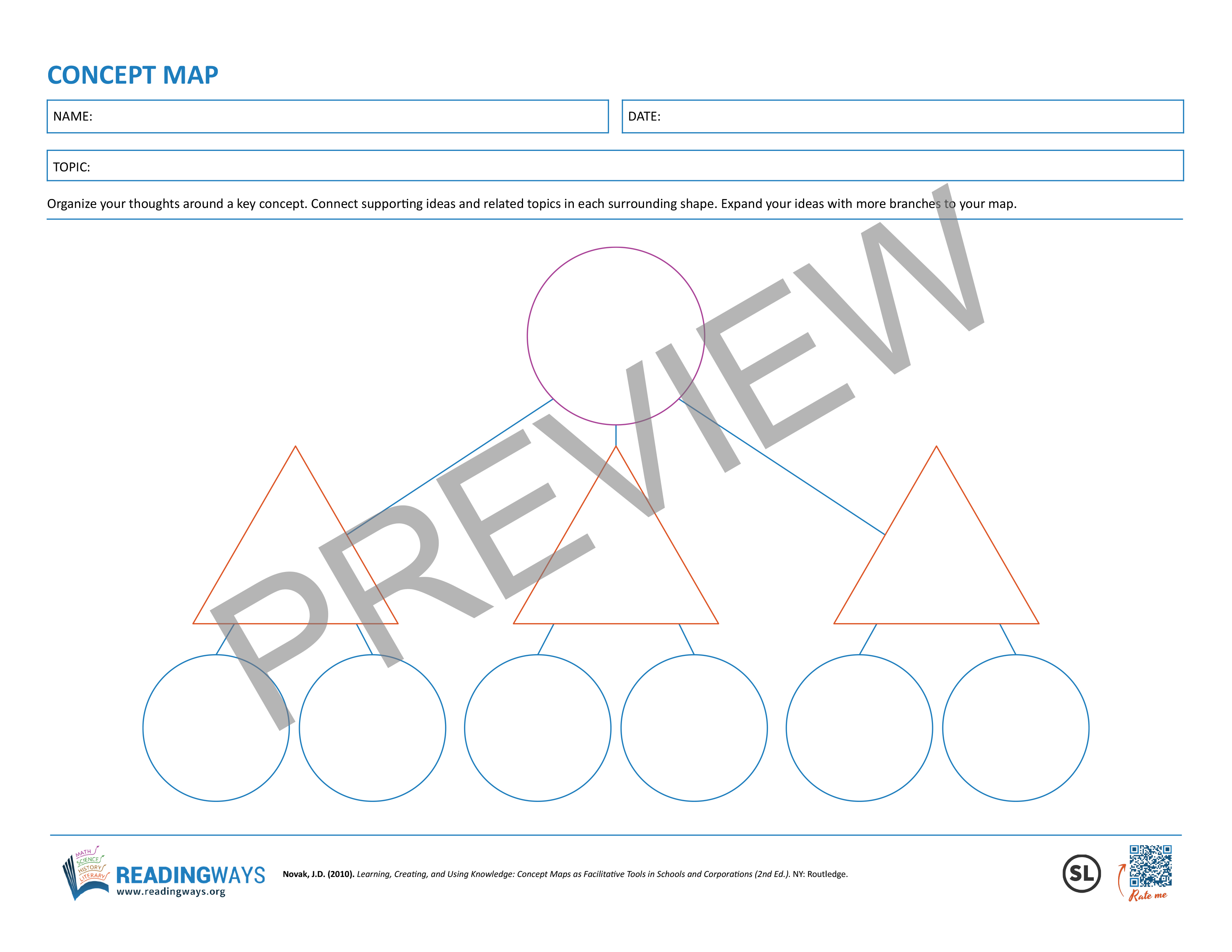
Concept Map

Vocabulary

While you read, map a key word to related words and ideas so you can understand how the concept is organized and remember it better.

How to do it

Use this when you read

Use this when one big idea connects to many parts, examples, steps, or related terms. A concept map helps you see the whole system instead of keeping ideas in a loose list.

Do this in your notes

  1. Put the main concept in the center of the page.
  2. Add related words, examples, parts, or subtopics around it.
  3. Draw lines to connect the ideas.
  4. Label the lines when you can, using phrases like causes, includes, leads to, or is an example of.
  5. Use the finished map to explain the concept out loud or in writing.

Note stem

Main idea: ___

Connected idea: ___

Relationship: ___

Tell us what you think

We'd love to hear which parts of this page felt useful, confusing, or fun. Your teacher will ask you about it - your feedback shapes what students see next.